COAST
COAST (Clean Oceans and Sustainable Transport) is an energy optimization platform, powered by AI, for U.S. seaports. It helps ports reduce emissions, minimize fuel waste, and lower operational costs by turning existing sustainability infrastructure into actionable insights. By unifying data from smart meters, shore power systems, fleet logs, and sensors, COAST provides real-time visibility, predictive guidance, and measurable sustainability outcomes without requiring new or expensive infrastructure.
Tools
Figma, Figjam, Rhino, KeyShot, Adobe Suite, ChatGPT, Perplexity
Professor
Denise Ranghetti do Pilar
Duration
20 Weeks
TEAM
Mackey
Nick Pratt
Austin Joseph
Pingyao Wan
Emiliano Mirafuentes Resendez
My Role
UX Strategist
Prototyping
Category
SENIOR CAPSTONE PROJECT
Recognition

INTERNATIONAL DESIGN AWARDS
Honorable Mention
December 2025
View Submission →
Research
Secondary research
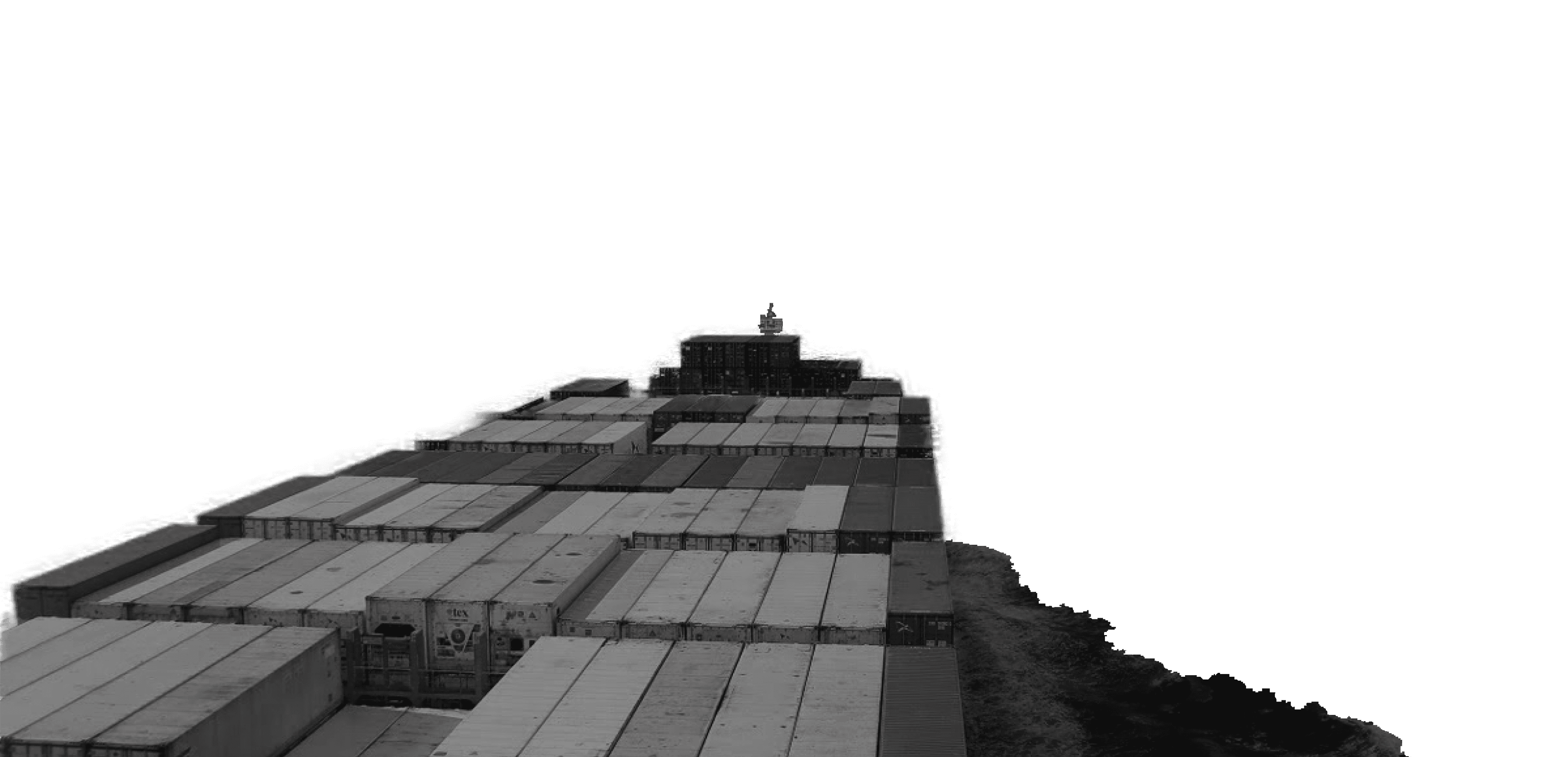
The maritime industry supports over
21.8 mil.
American jobs
and
American ports are responsible for over
2.89 tril.
in economic activity.
HOWEVER...
all of this is coming at a cost.

Total global maritime emissions exceed
1 Billion
metric tons annually.
That’s the same emissions as 217 million passenger cars annually.
If considered a country, the shipping industry would rank as the
6th largest
emitter globally




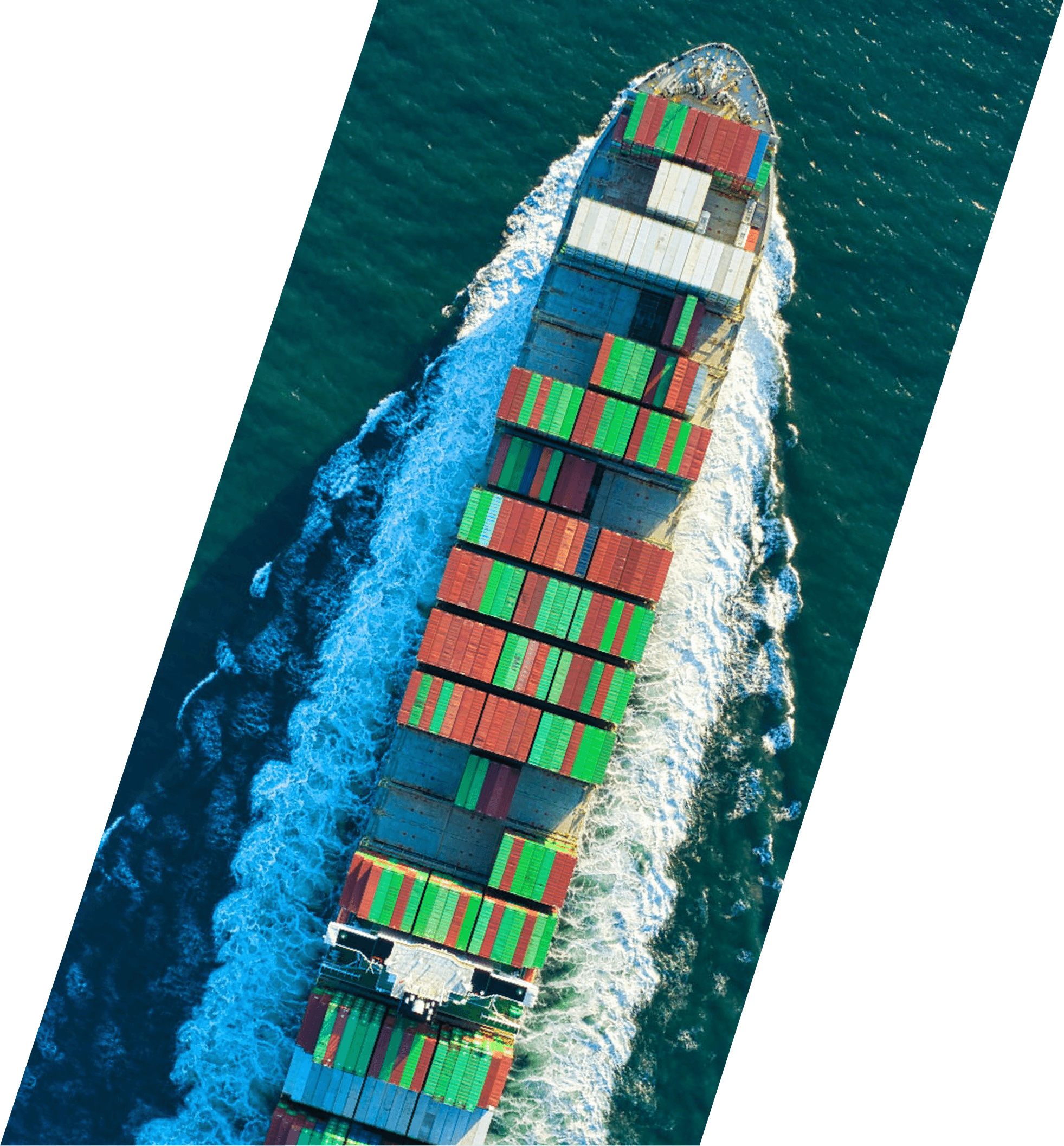
It's only going to get busier. Maritime trade volumes are projected to grow
30%
by 2050.
The International Maritime Organization (IMO) has set the following decarbonization goals:
20%
by 2030
70%
by 2040
100%
by 2050
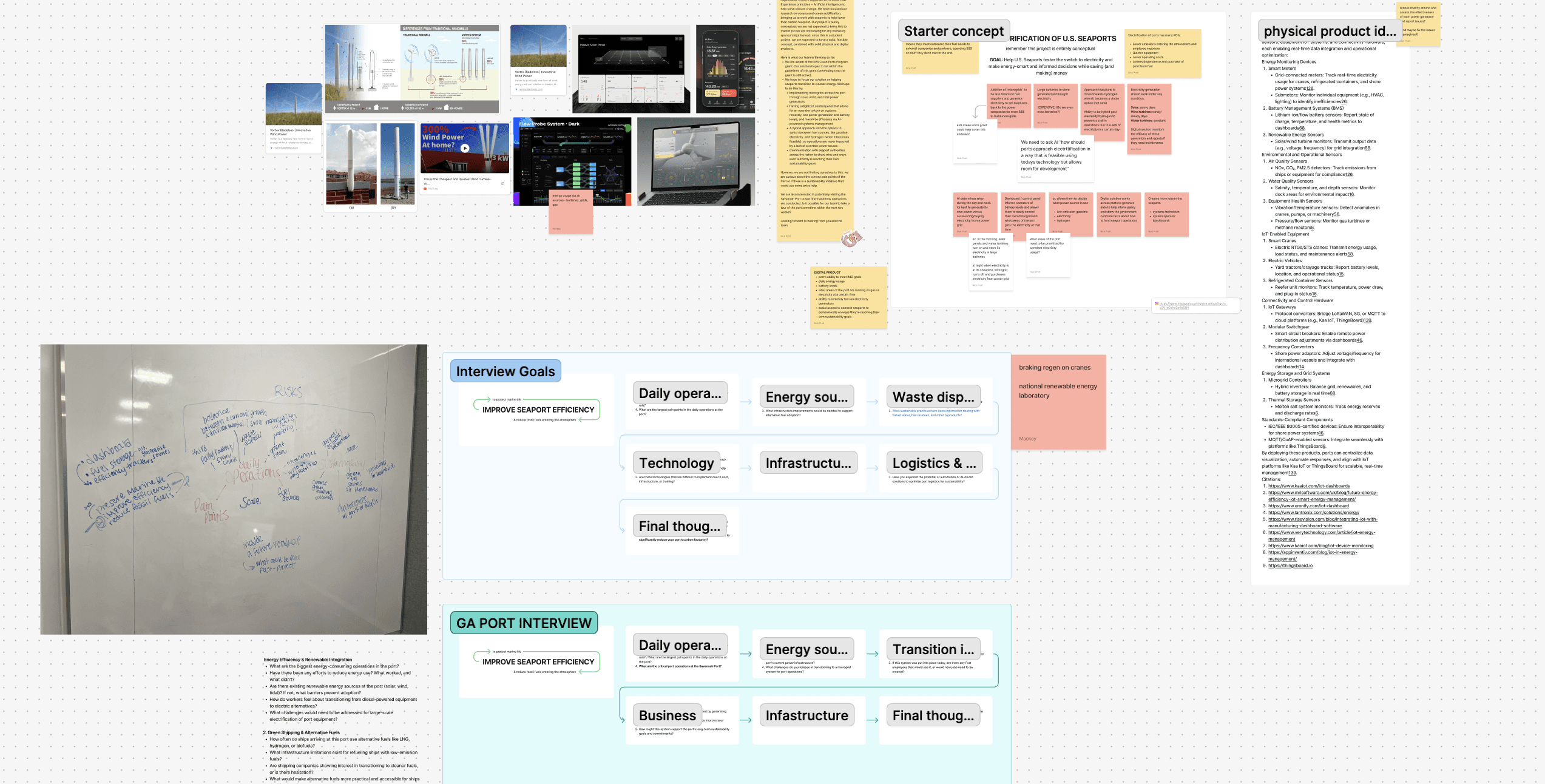
Primary Research Goals
Understand current energy and fuel management workflows at seaports.
Identify pain points in data access and decision-making.
Gauge receptiveness to AI-driven recommendations and automation.
Primary research
Recruiting relevant interview participants was incredibly challenging due to our initially broad scope and the limitations on the amount of federal information that can be shared. However, because of our personal and professional connections, we were able to talk to:
5
environmental experts
4
federal port employees
362
unique data points
From our environmental expert interviews, our key takeaways were…
Start small: Global climate change feels overwhelming.
From our federal port employee interviews, our key takeaways were…
AI could help forecast electricity demand and optimize power use to reduce costs.
We were lucky to be able to talk to a key environmental voice who also served as a mentor for our project.
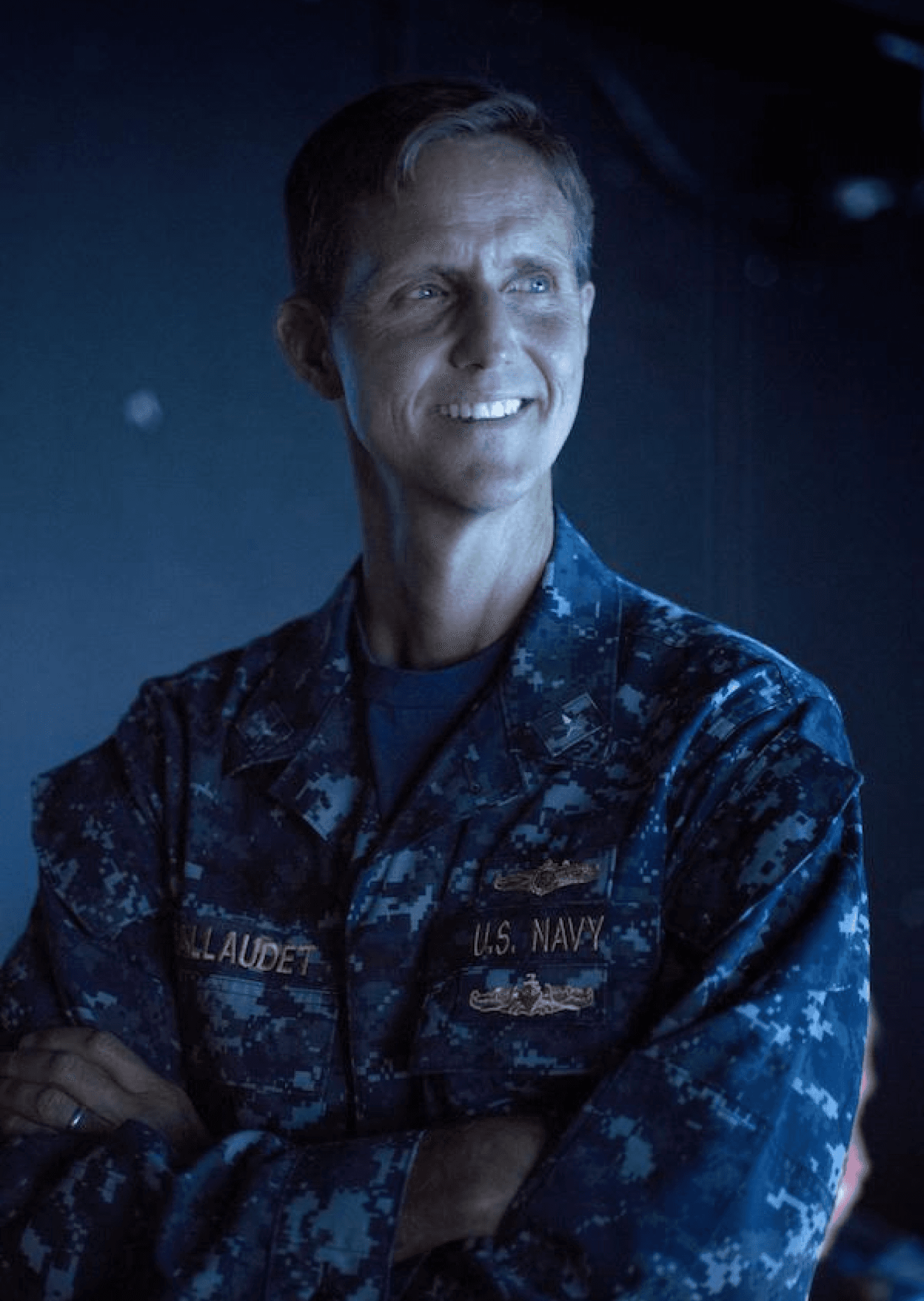
Tim Gallaudet
Fmr. Deputy Administrator, NOAA
Retired U.S. Navy Rear Admiral
CEO, Ocean STL Consulting
From Tim's interviews, our key takeaways were…
Optimization via AI allows seaports to not only be more green, but more efficient. By implementing AI into their work, ports could reduce fuel use, conserve energy, provide a more holistic outlook on operations.
There absolutely must be an economic incentive for the implementation of solutions. In order to gain government support for our solution, we must be able to frame our solution in terms of local and regional economic development.
While transitioning to renewable energy is essential for long-term sustainability, it is not an immediate, dramatic shift.
Frame climate change as an opportunity. Focus on solutions, not panic.
Analysis
EXISTING USER PAIN POINTS
Unable to pinpoint systems inefficiencies in real time
Frustrated by multiple unorganized data streams
Fearful of operational downtime
The cost of all new electric infrastructure is overwhelming
No clear ROI to electrification
Pressured to meet emission compliance deadlines
THE ISSUE
The path to electrification is unclear, leaving ports stuck between urgent climate goals and operational realities.
How might we create an innovative power solution that allows seaports to control their energy, leading to higher productivity, lower costs, and zero emissions?
How might we consolidate existing data streams (smart meters, fuel logs, GPS traffic) into a single, intuitive interface and utilize AI for port operators?
Final Solution
Ecosystem
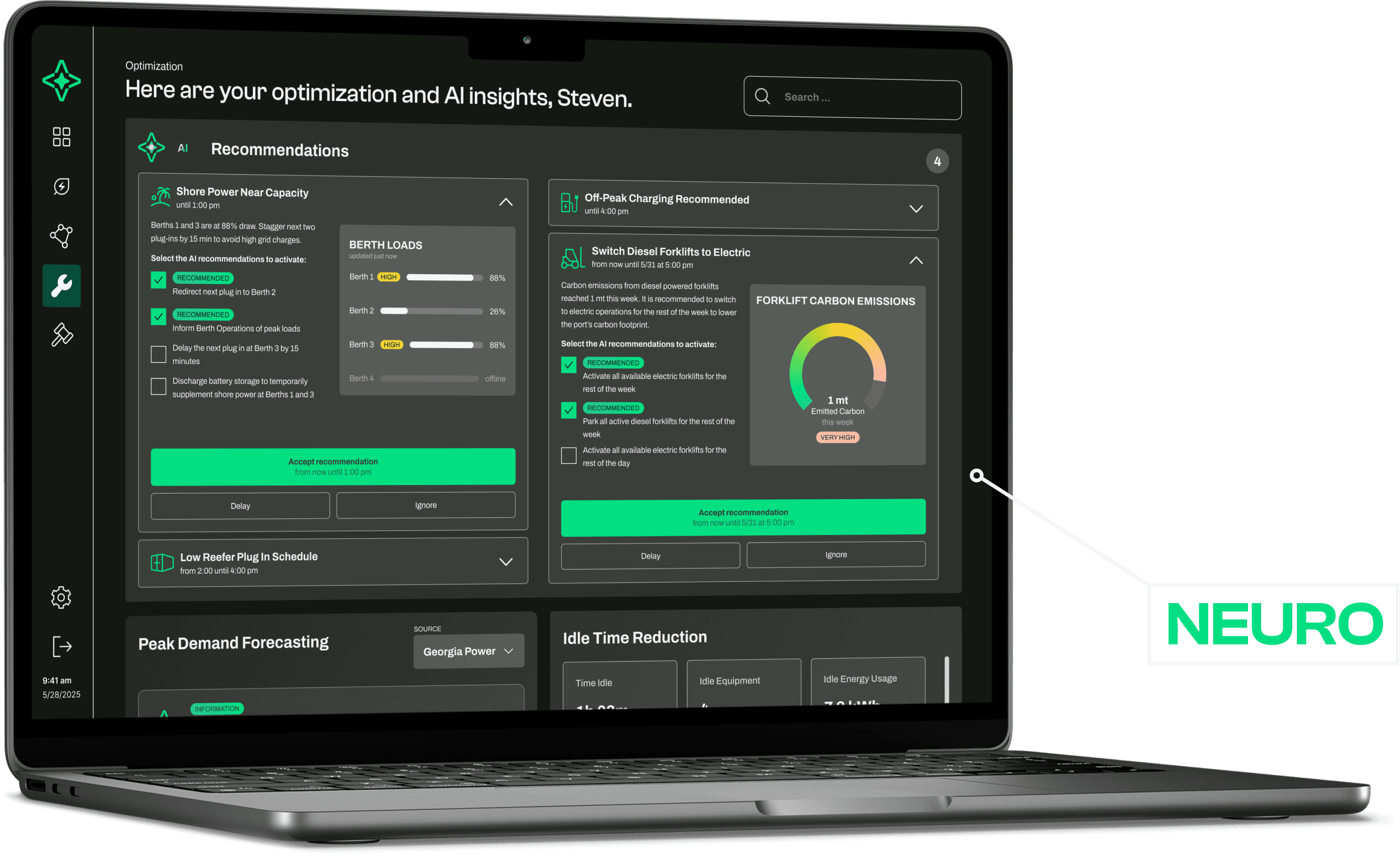
Neuro
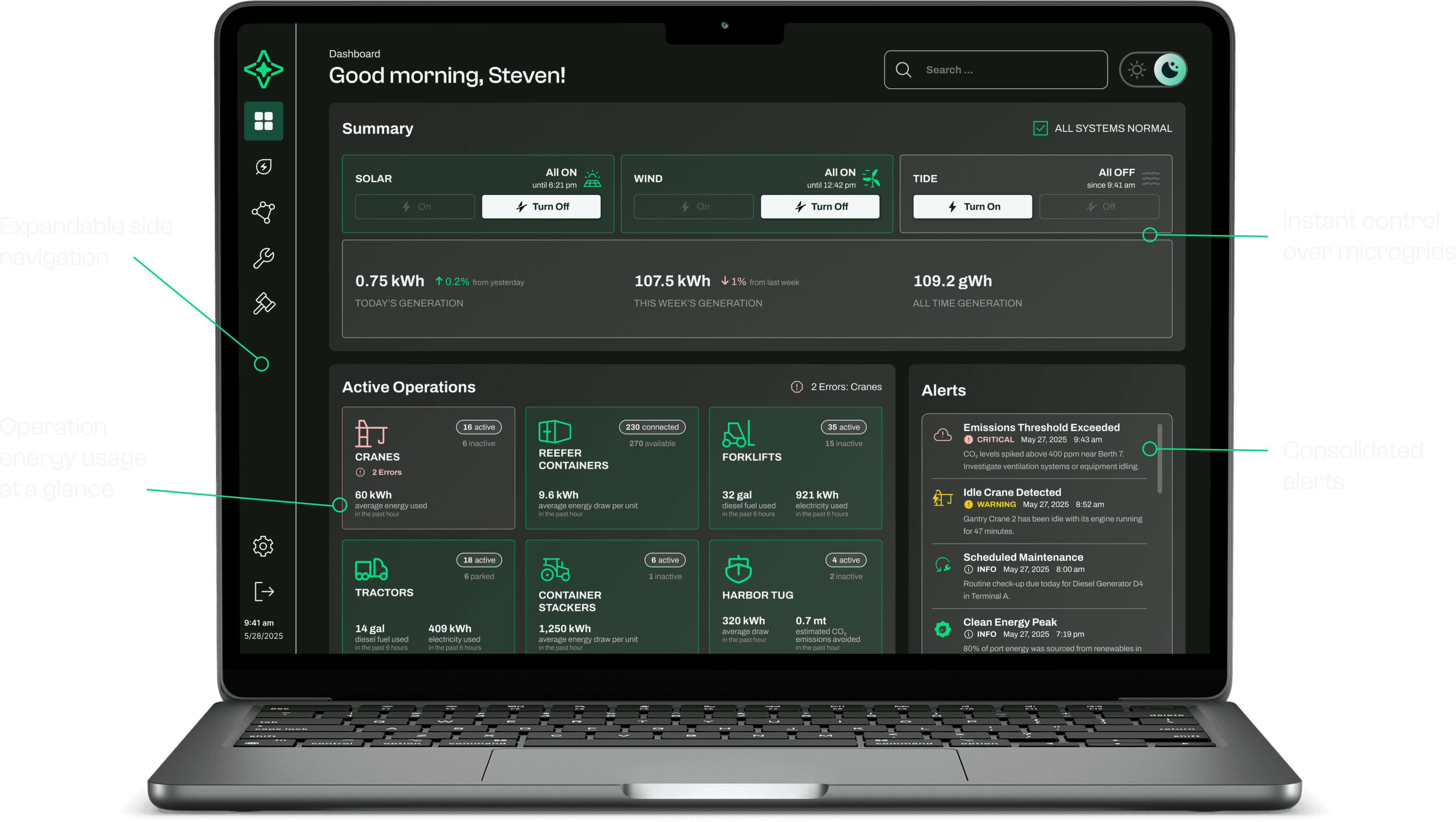
Click to change to light mode
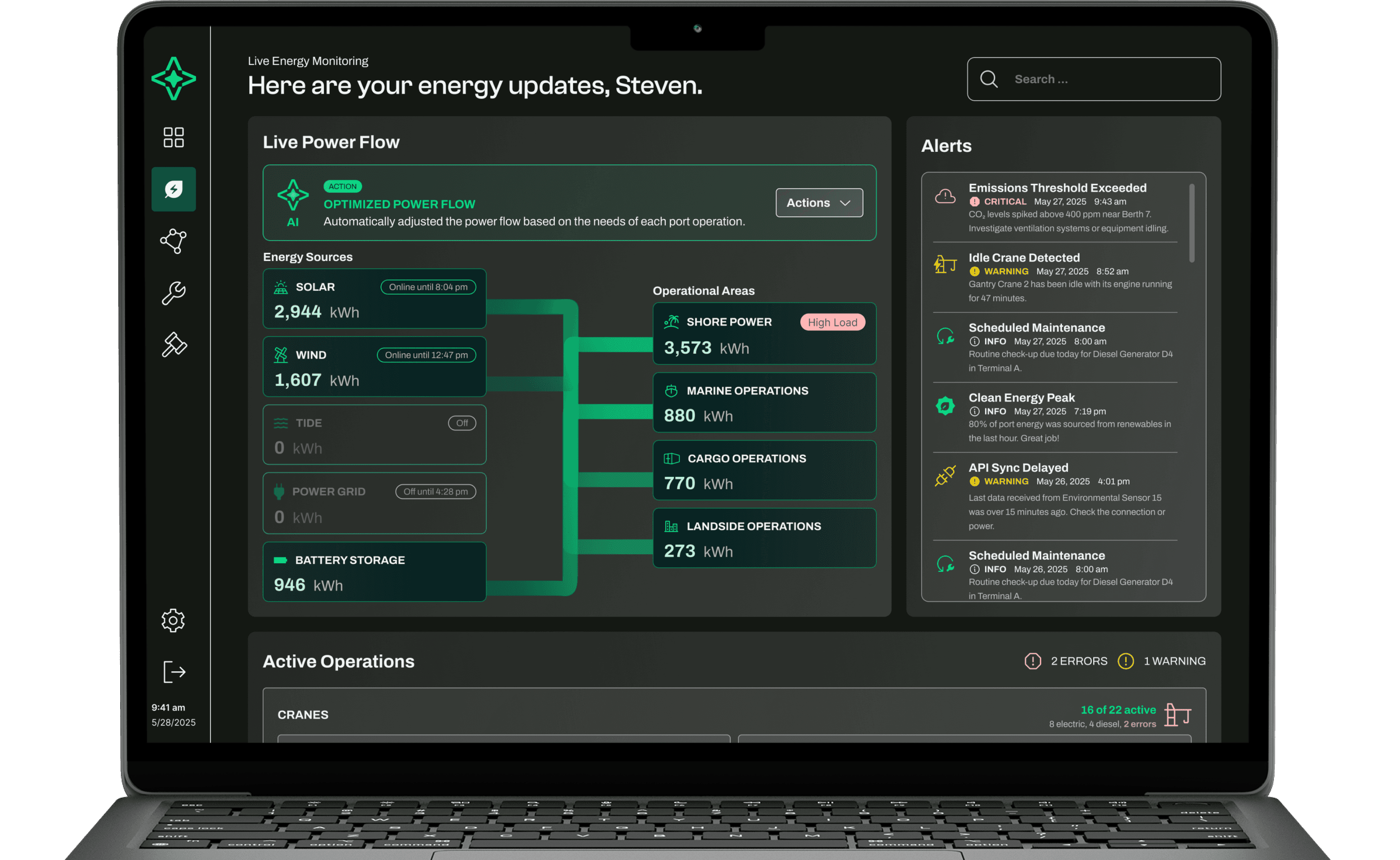
Visualize port’s current energy needs & usage
AI automatically adjusts power to different operations depending on the day
Visualize the port’s current energy needs and usage while AI automatically adjusts power priorities to different operations
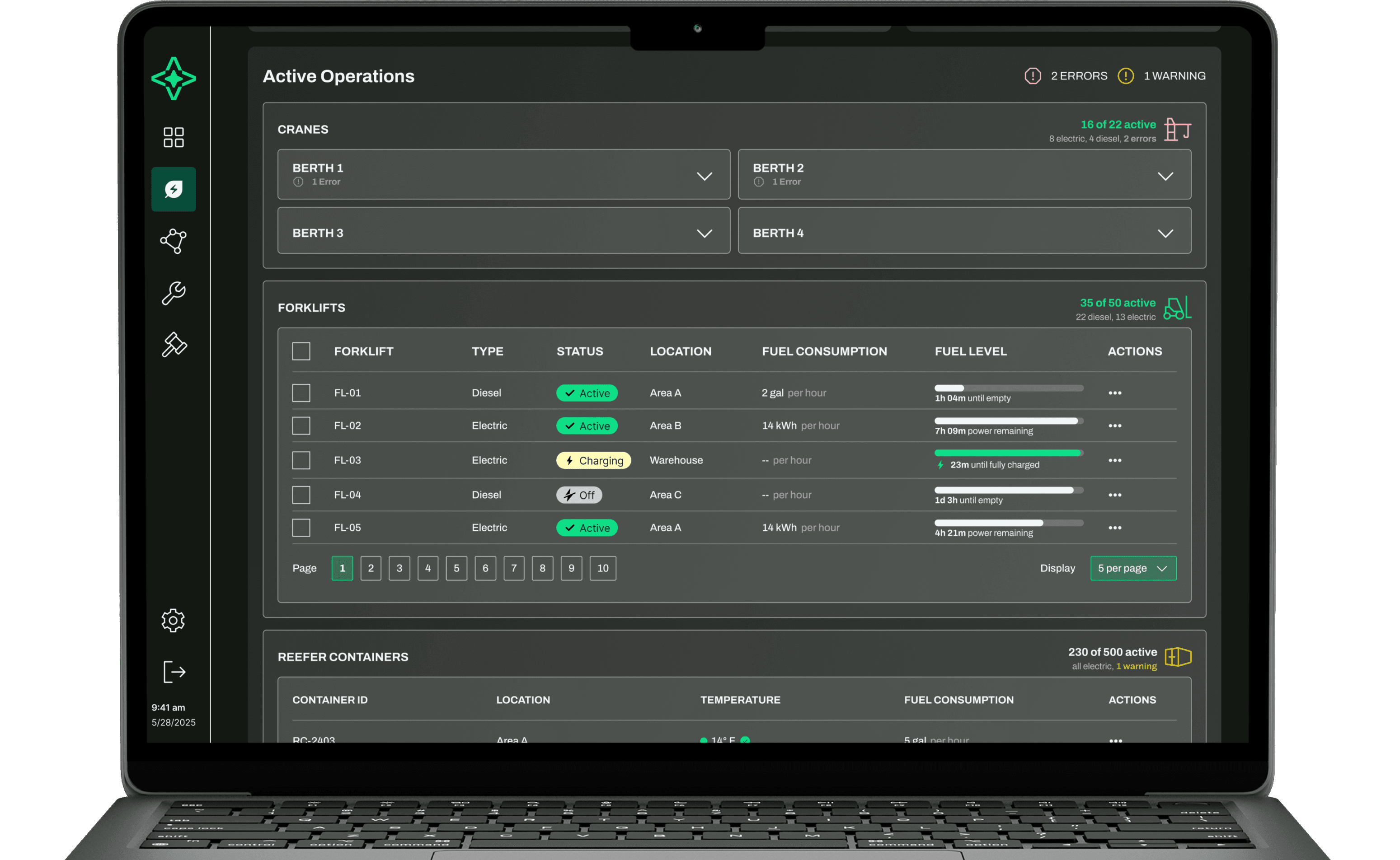
Rich data, centralized
Control the energy needs of any operation in the port
Visualize rich data from across different areas in the port and control the energy needs of any operation
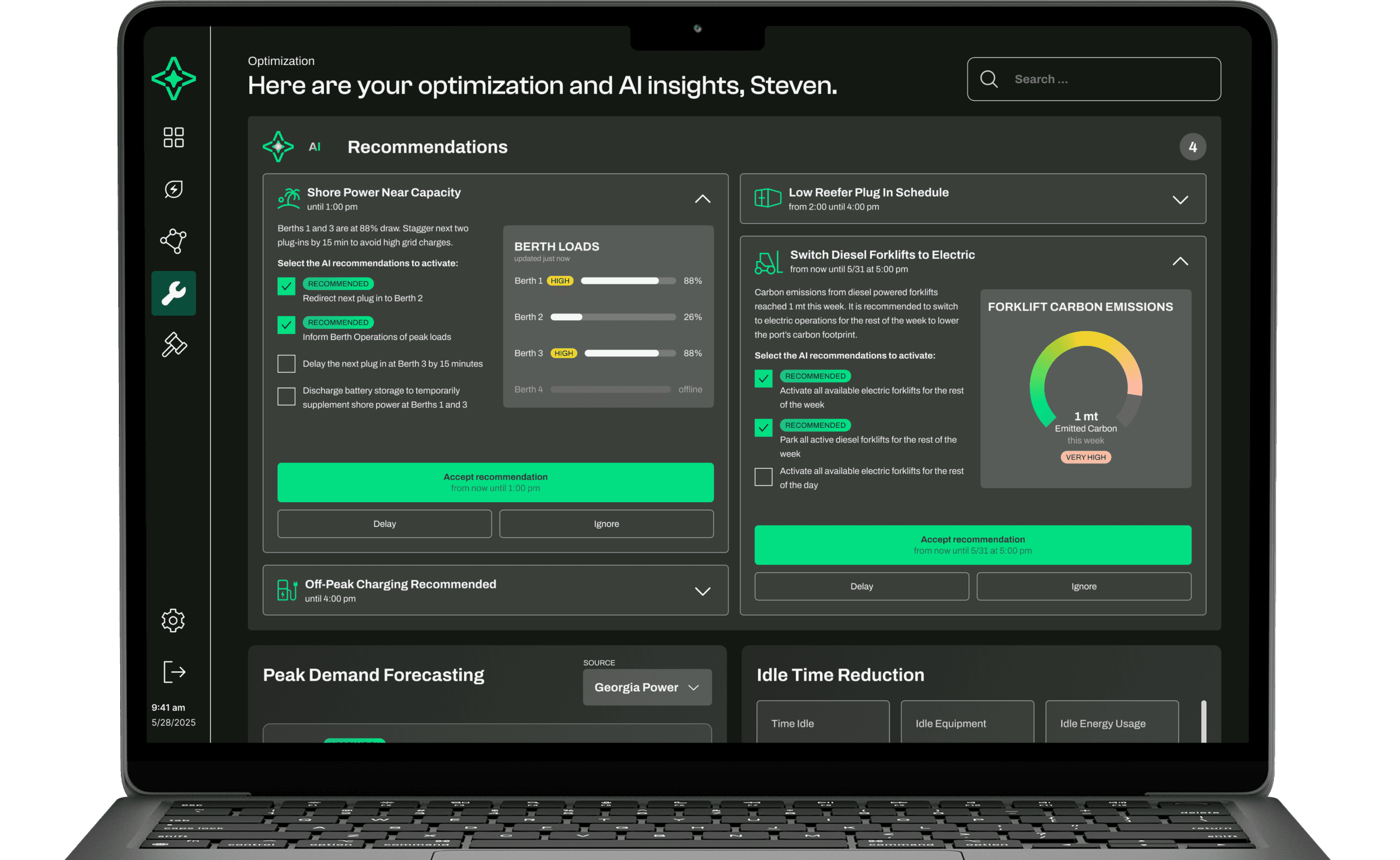
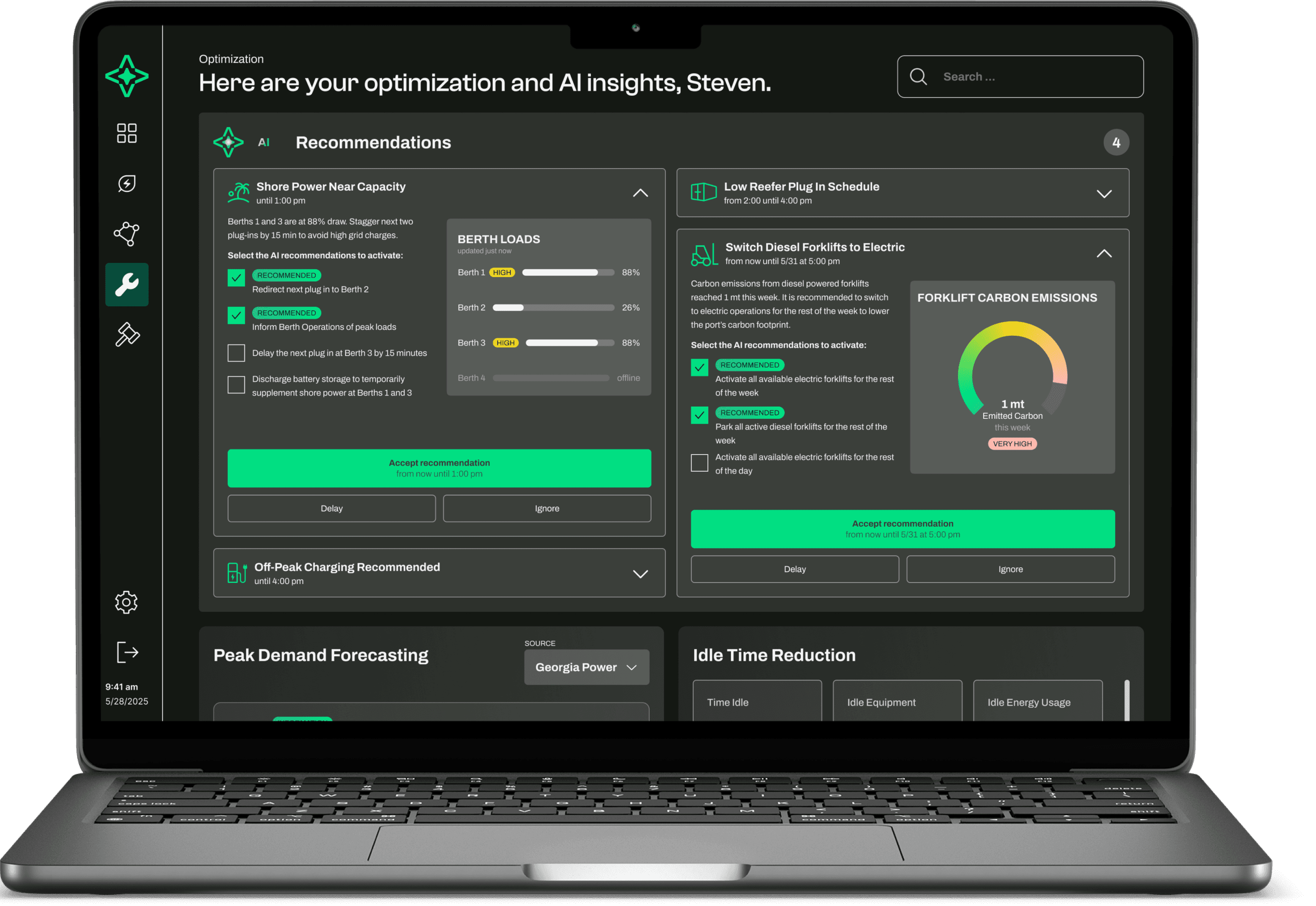
AI suggests ways to optimize the port’s energy and reduce carbon footprint
Multiple options for every suggestion
Accept, delay, or ignore every suggestion
AI suggests ways to optimize the port’s energy and reduce carbon footprint; accept, delay, or ignore every suggestion
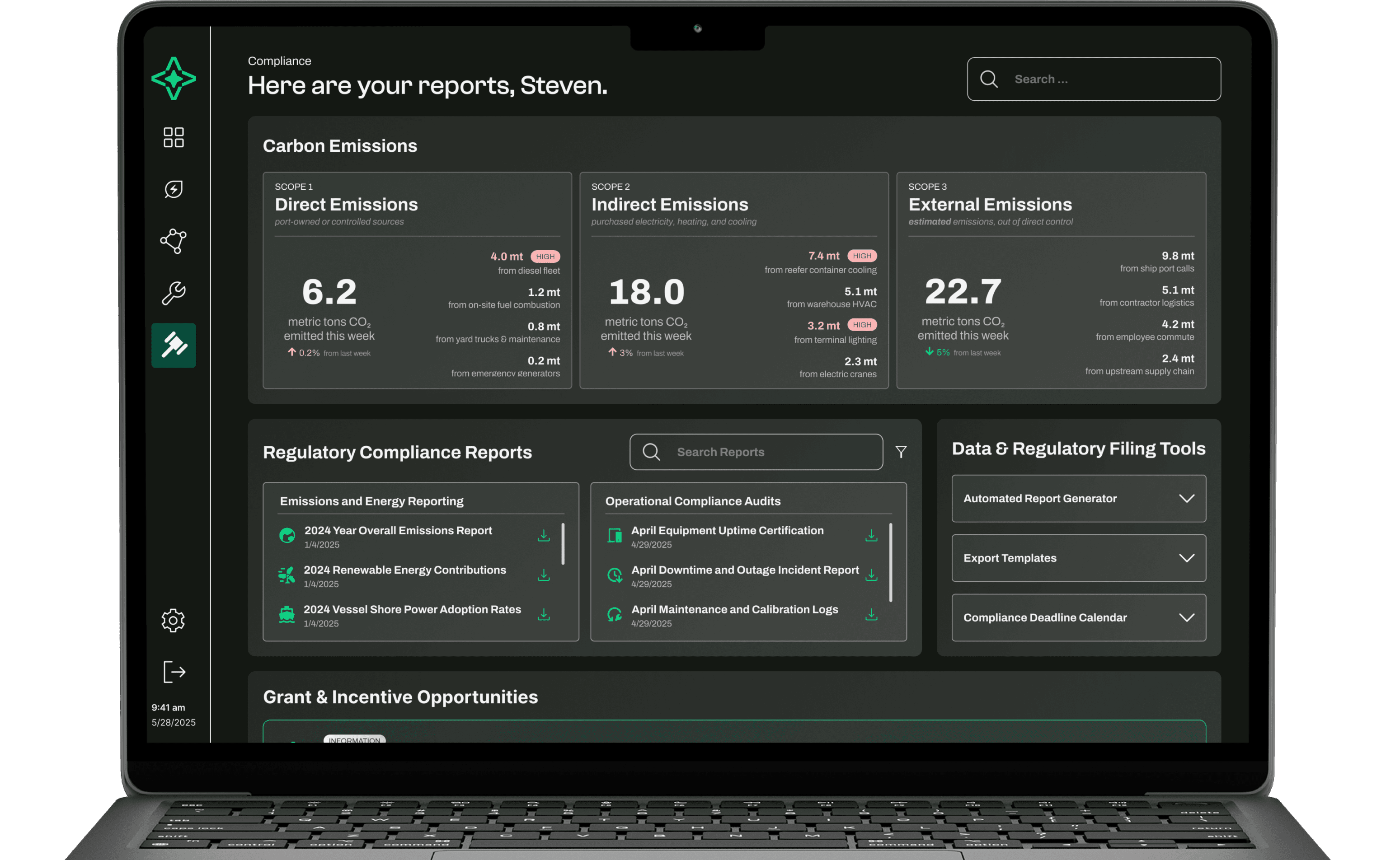
Automatically generated reports
Visualize your exact carbon emissions in every step of the supply chain
Visualize rich data from across different areas in the port and control the energy needs of any operation

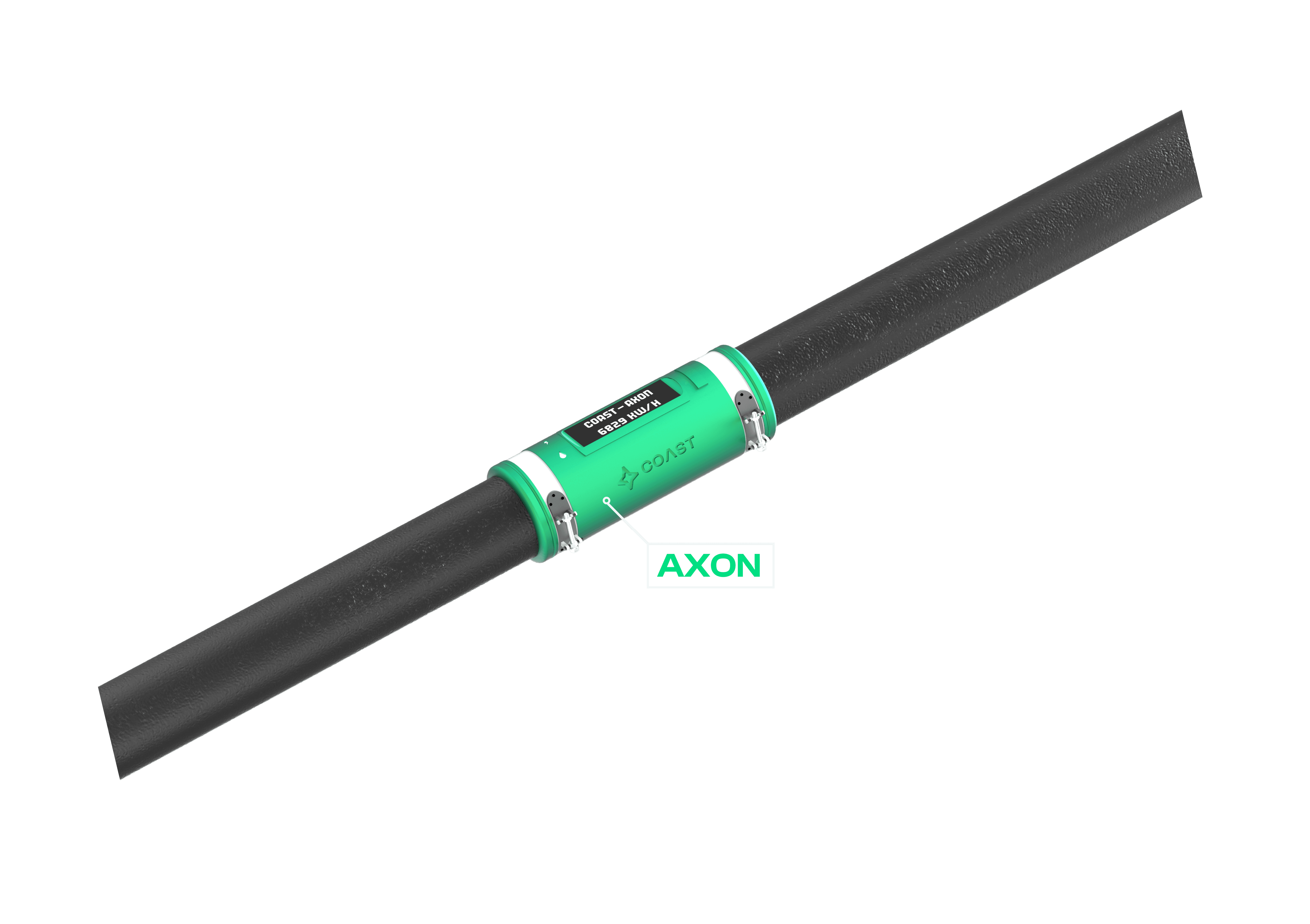
Axon
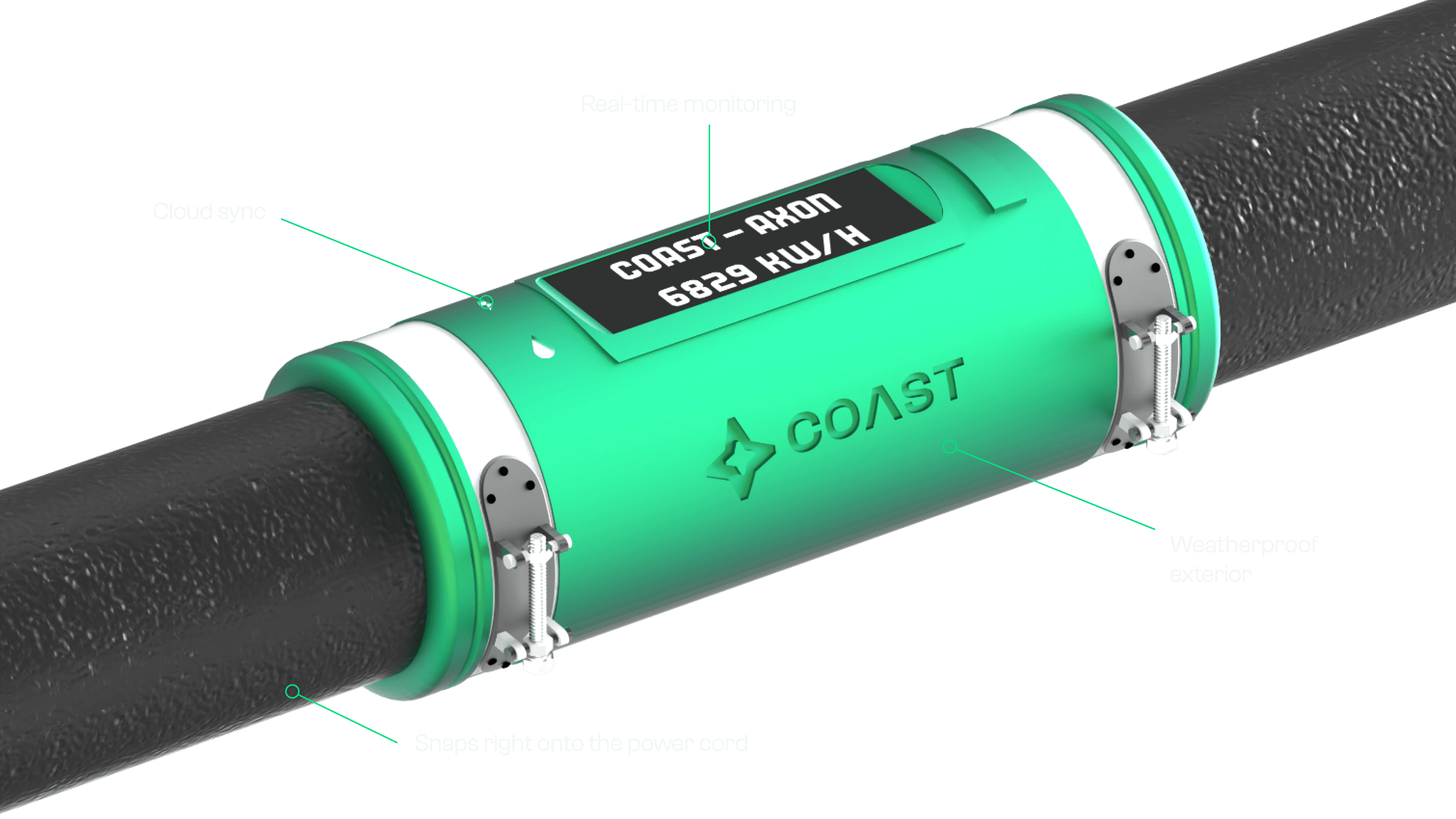
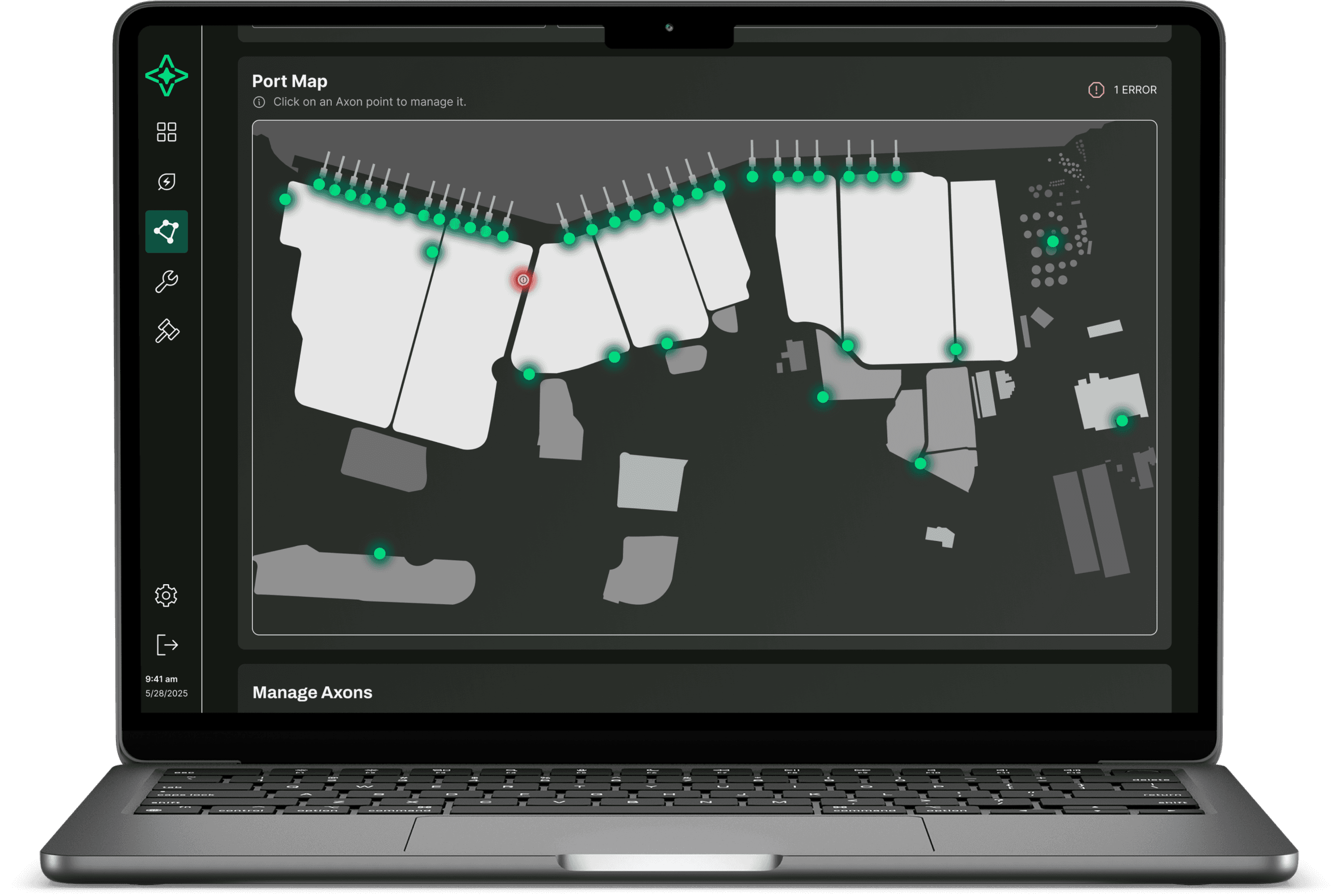
Control every Axon point using the Axon Map on Neuro
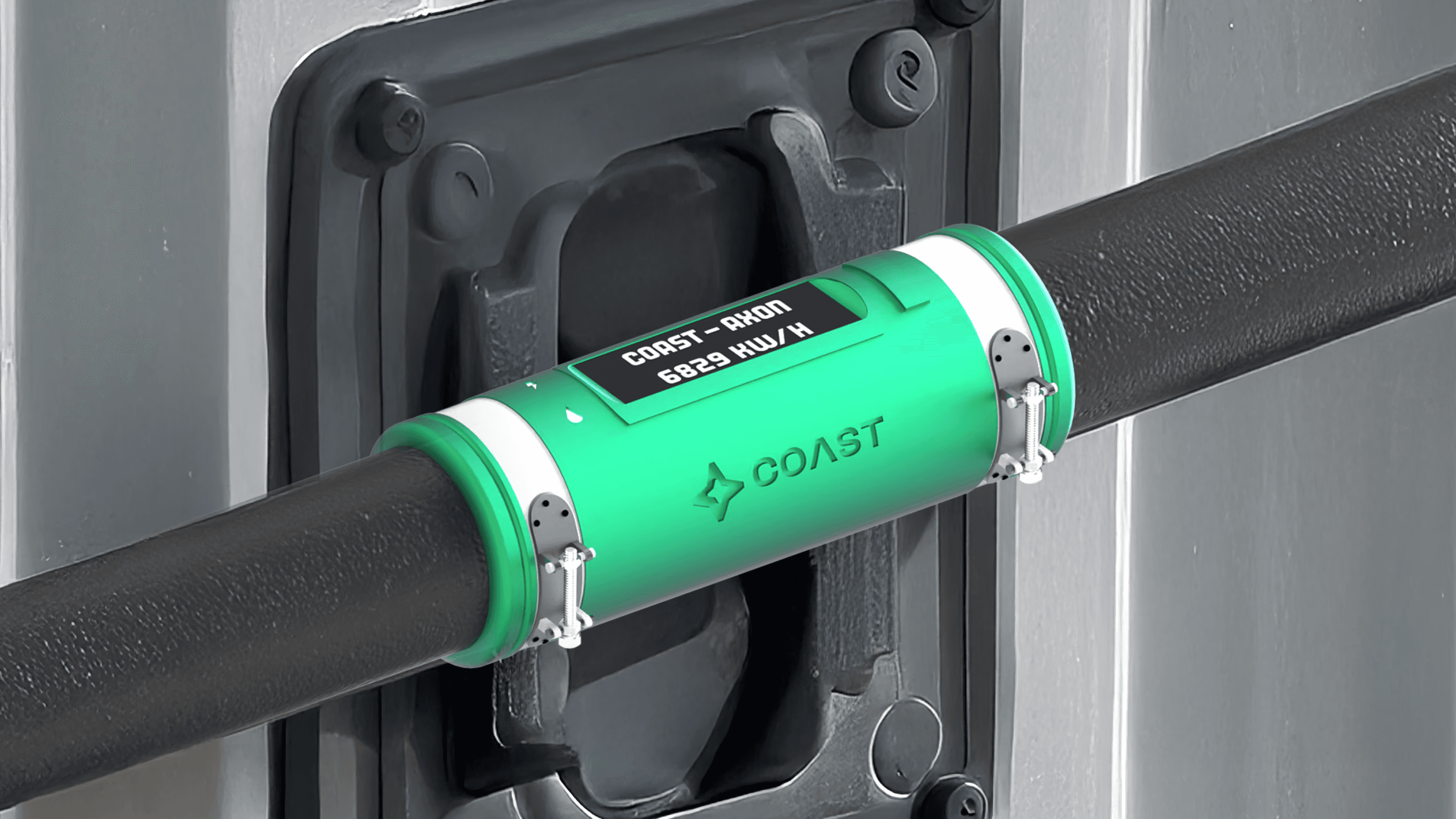
Attach Axon to the equipment's main power line


Aggarwal
©2026 Krishna Aggarwal